Types of Engineered Stone
Not all artificial stone is made the same way. Two main types are sold for countertops and other surfaces:
- Engineered quartz, which binds crushed quartz with polyester resin, is the most common type sold in the U.S.
- Sintered stone, also called ultra-compact surfaces, is fused together under extreme heat and pressure instead of resin and is often marketed for outdoor or high-heat use.
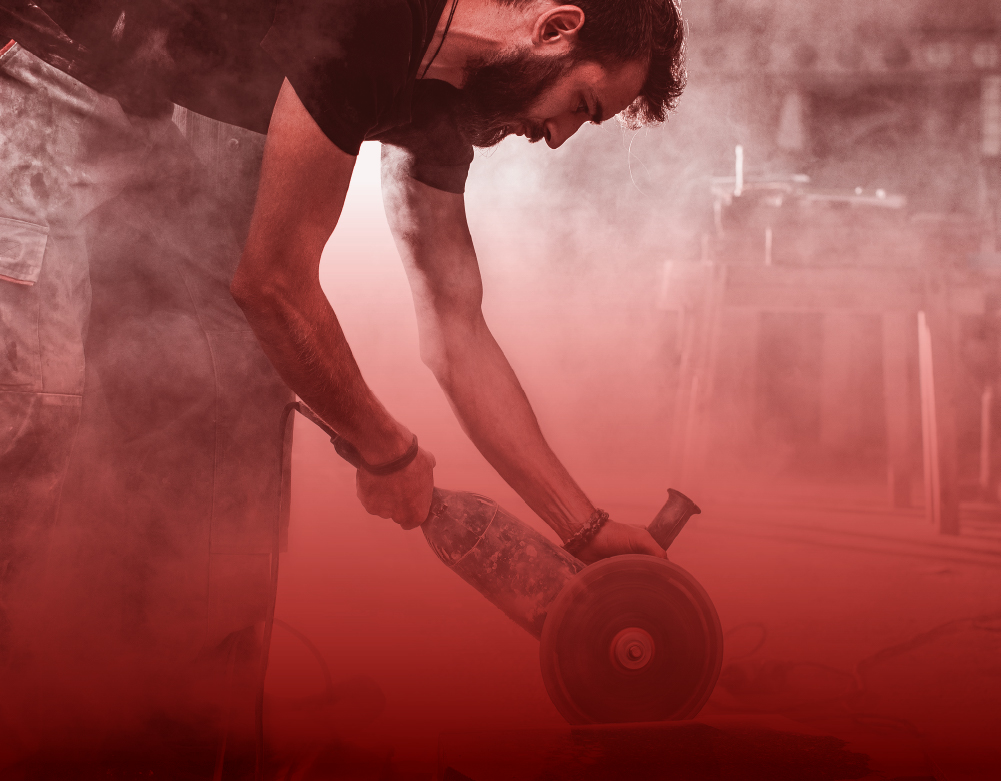
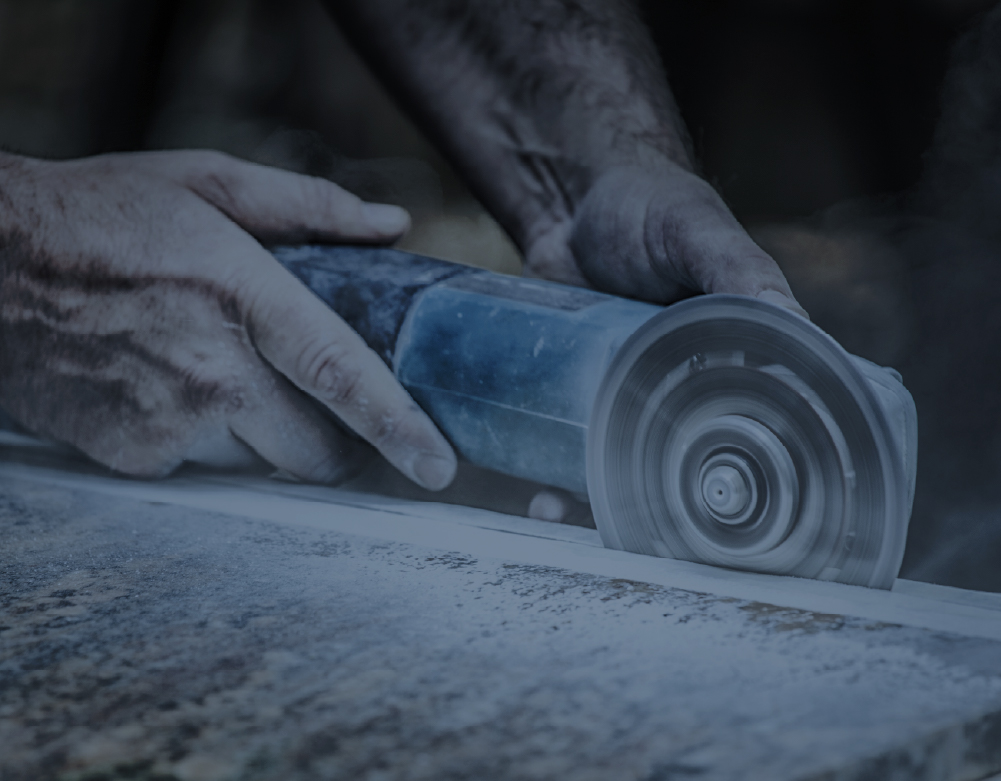
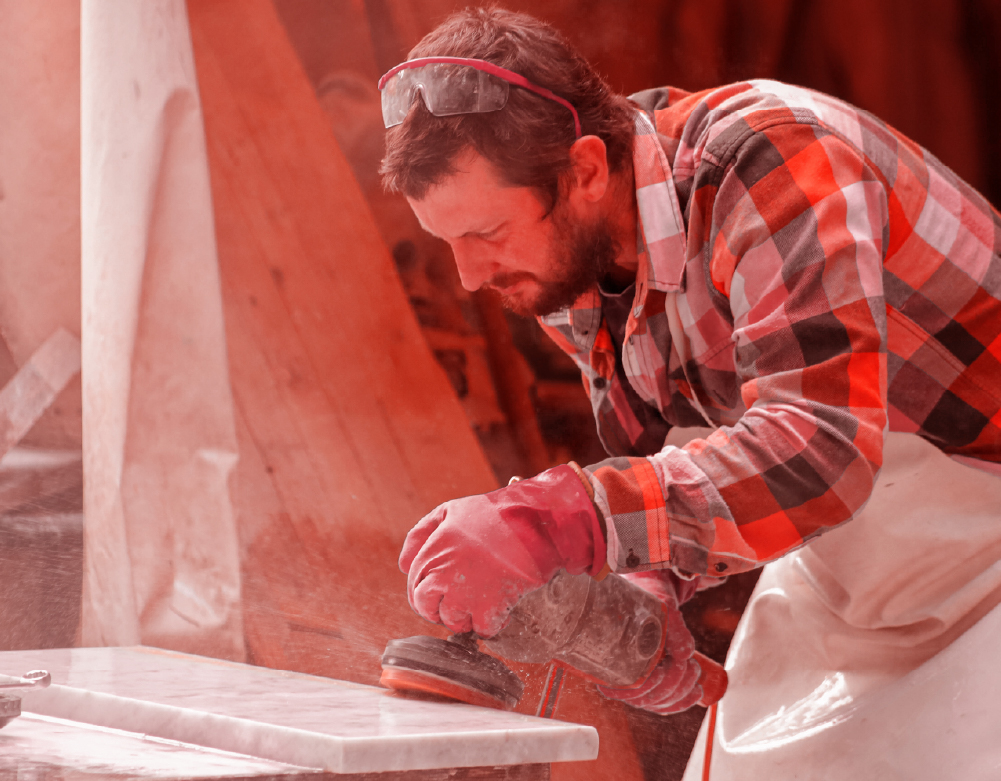
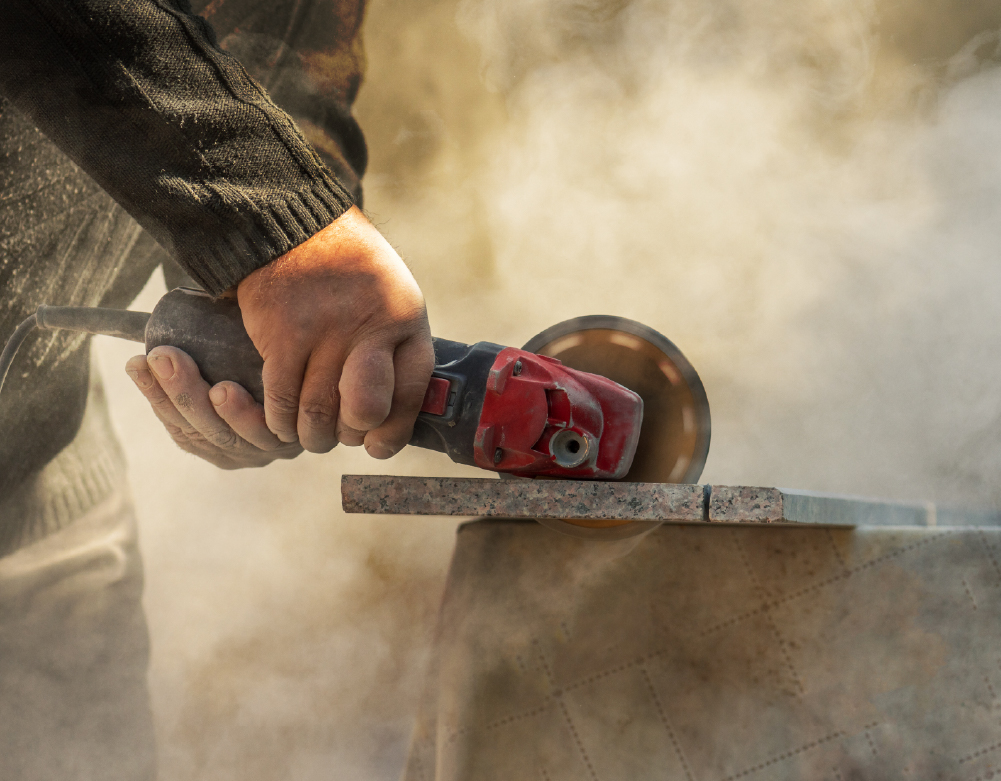
Both types can carry a high silica content and release dangerous dust when cut, ground, fabricated or polished.
Why Engineered Stone Causes More Severe Silicosis Faster
Because artificial stone contains so much more silica than granite or marble as well as other hazardous substances not present in natural stone, workers who work with it can develop silicosis far faster than earlier generations of stone workers. The disease can develop in months or a few years rather than the decades it historically took with natural stone, according to OSHA.
Manufacturers of Engineered Stone
Artificial stone is sold under many brand names. Common examples named by the CDC’s National Institute for Occupational Safety and Health include:
- Caesarstone
- Cambria
- Silestone
- Zodiaq
- Dekton and Neolith
- LG Viatera
- HanStone
- MSI Q Quartz
- Compac
OSHA Exposure Limits for This Trade
OSHA has identified stone countertop fabrication and installation as a high risk industry for silica exposure. Its Respirable Crystalline Silica Standard sets a permissible exposure limit of 50 micrograms per cubic meter of air over an 8 hour shift, with an action level of 25 micrograms that triggers additional monitoring requirements. In 2023, OSHA launched a focused inspection initiative specifically targeting engineered stone fabrication and installation businesses, citing research estimating that 100,000 stone fabricators nationwide are at risk, according to OSHA. The common methods used to control silica methods are not sufficient on their own to meet these safety limits. And none of those methods eliminate the release of respirable crystalline silica.